Why A Coyote?
For decades, building a first-generation Mustang meant making compromises. You could build a healthy small-block Windsor, but reliability often came at the expense of power, while big horsepower usually sacrificed drivability. The Ford Coyote changed that equation. From the factory, the all-aluminum 5.0L delivers modern EFI, exceptional reliability, broad aftermarket support, and the ability to produce well over 450 horsepower with the manners of a daily driver. Turn the key on a cold morning, drive across the country with the air conditioning on, or spend the weekend at the track—the Coyote does it all without the constant tuning, carburetor adjustments, or maintenance that older engine combinations often demand.
More importantly, the Coyote transforms what a first-generation Mustang is capable of becoming. The engine's willingness to rev beyond 7,000 RPM, paired with a modern six-speed transmission and properly engineered suspension, creates a driving experience that rivals many contemporary performance cars while preserving the unmistakable styling of the 1965–1970 Mustang. It's no longer just about adding horsepower; it's about combining classic design with the refinement, reliability, and confidence expected from a modern performance vehicle.
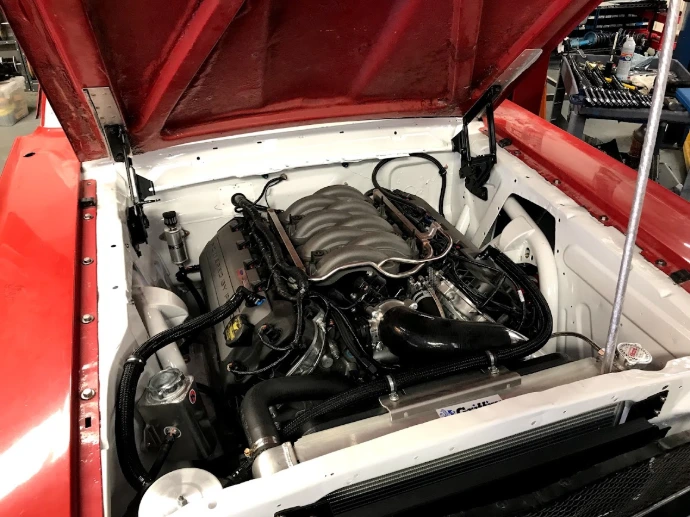
Is a Coyote Swap Right For You?
A Coyote swap is one of the most rewarding modifications you can make to a first-generation Mustang—but it isn't the right choice for every owner. Before ordering an engine or tearing into your project, it's important to understand what you're trying to build. A Coyote-powered Mustang isn't simply a classic with more horsepower; it's a complete modernization of the driving experience. While the result can be an incredibly capable, reliable, and refined performance car, it also requires a commitment to updating nearly every major vehicle system.
A Coyote swap may be right for you if you:
- Want modern reliability with turn-key operation.
- Plan to drive your Mustang regularly or on long trips.
- Intend to build a Pro Touring, autocross, or track-day car.
- Value fuel injection, overdrive transmissions, and OEM drivability.
- Want a platform capable of supporting future horsepower upgrades.
On the other hand, a traditional small-block Ford may be the better choice if you:
- Are restoring the car to factory specifications.
- Prefer the simplicity and character of a carbureted engine.
- Are working within a limited budget.
- Wish to retain a factory looking engine bay and retain factory shock towers.
Understanding the Biggest Challenge
One of the biggest misconceptions surrounding a first-generation Mustang Coyote swap is that the project revolves around installing an engine. In reality, the engine is often the easiest part. Today's aftermarket offers complete engine packages, control packs, transmissions, and installation hardware that make physically fitting a Coyote into a classic Mustang more achievable than ever before.
The true challenge is understanding the scope of the project before it begins.
A Coyote swap is not simply an engine upgrade—it's a complete vehicle transformation. A modern 5.0L produces more than twice the horsepower of many original first-generation Mustangs while delivering levels of refinement, reliability, and drivability that the rest of the vehicle was never designed to support. Suspension, steering, brakes, cooling, fuel delivery, drivetrain, chassis stiffness, and electronics all become part of the conversation.
This is where many projects lose momentum. Builders budget for an engine and transmission only to discover that the supporting systems quickly become the largest portion of the investment. Without a clear understanding of the complete project, unexpected costs and changing priorities can turn an exciting build into a frustrating one.
A successful Coyote swap isn't measured by whether the engine fits. It's measured by whether the finished car feels like Ford could have built it that way. Achieving that result requires viewing the project as a complete vehicle system—not a collection of individual parts.
Fortunately, that outcome isn't accidental. It begins with a plan.
Project Planning
Before purchasing a single part, take the time to define exactly what you want your first-generation Mustang to become. This is one of the most important steps of any Coyote swap, yet it's often the most overlooked. The decisions you make at the beginning of the project will influence nearly every component that follows, from engine and transmission selection to suspension, brakes, cooling, and overall budget.
A Coyote swap is more than an engine conversion—it's an opportunity to redefine what your Mustang is capable of. Whether your goal is a comfortable weekend cruiser, a long-distance touring car, a Pro Touring build, or a dedicated track machine, having a clear vision from the outset will help ensure every investment moves the project in the same direction.
There is no universally "correct" way to build a first-generation Mustang. The right combination of parts depends entirely on how you intend to use the car. Builders who establish their goals early almost always end up with a more cohesive, better-performing vehicle than those who purchase parts first and define the project later.
Before moving on, ask yourself a few simple questions:
- How will the car spend most of its time? Weekend cruising, long-distance touring, spirited backroad driving, autocross, open-track events, or competition?
- What level of performance are you trying to achieve? A balanced street car, an aggressive Pro Touring build, or a dedicated race car?
- Do you want to preserve the factory appearance, or are you comfortable modifying the body to accommodate wider wheels and tires?
- Do you have a target wheel and tire package in mind? While we'll cover suspension and fitment later, this decision has a significant impact on the overall build.
- Will the car remain naturally aspirated, or do you anticipate adding forced induction in the future?
- What level of fabrication are you comfortable with? Bolt-on installation, moderate fabrication, or a fully custom build?
- What is your realistic budget—not just for the engine, but for the completed vehicle?
The answers to these questions become the foundation for every decision that follows. Throughout the remainder of this guide, we'll show you how each major system fits into the bigger picture, helping you build a Mustang that's not only powerful, but balanced, reliable, and engineered with purpose.
Cortex Tip: Build the car you'll actually drive—not the one you imagine driving. The most rewarding Coyote swaps are those with a clearly defined purpose, where every component works together to achieve a common goal.
Choosing The Right Generation of Coyote Engine
With your build goals established, it's time to select the engine. Fortunately, there isn't a wrong choice. Every generation of Ford's 5.0L Coyote is capable of producing an exceptional first-generation Mustang when paired with the appropriate supporting systems. The right choice depends less on horsepower and more on your budget, intended use, and long-term goals.
Gen 1 (2011–2014) remains the value leader of the Coyote family. With years of aftermarket development behind it, Gen 1 offers proven swap solutions, excellent parts availability, and outstanding reliability.
Gen 2 (2015–2017) builds on that foundation with incremental performance improvements while maintaining the maturity and aftermarket support that make it an excellent choice for street and Pro Touring builds.
Gen 3 (2018–2023) offers another step forward in performance and remains one of the most popular swap choices today. Its direct injection system provides additional capability but also introduces added complexity that should be considered during planning.
Gen 4 (2024+) represents the latest evolution of the Coyote platform and is currently the only generation available new as a Ford Performance short block. While it's an exciting option with excellent long-term parts availability, aftermarket tuning and swap support are still evolving. As a result, some combinations remain less proven than their earlier counterparts.
One of the biggest mistakes we see is builders chasing the newest engine simply because it's the newest.
Our advice is simple: don't build a science project unless your goal is to build a science project.
New platforms are exciting, but they often require additional engineering, development, and troubleshooting as the aftermarket catches up. Mature engine combinations, on the other hand, benefit from years of real-world testing, documented solutions, and readily available parts.
The best Coyote swap isn't necessarily the newest or most powerful—it's the one that gets finished. Projects that exceed their owner's technical ability or budget often stall before they're ever driven. Choose the engine that best aligns with your goals, experience, and resources. If your vision involves pushing the limits of what's been done before, that's where experienced engineering partners like Cortex Racing can help turn ambitious ideas into successful builds.
Choosing The Right Transmission
With the engine selected, the next major decision is choosing a transmission. Like the Coyote itself, there is no universally "best" option—only the option that best supports your build goals. Gear ratios, overdrive, shift quality, torque capacity, packaging, and intended vehicle use should all be considered before making a decision.
One important point to remember is that your transmission choice extends well beyond the gearbox itself. Crossmembers, driveshaft length, clutch or torque converter selection, shifter location, tunnel clearance, hydraulic clutch systems, and rear axle gearing are all influenced by this decision. Choosing the transmission early allows these supporting systems to be planned together rather than pieced together later.
A point on fitment: Expect to do some cutting and welding. With virtually all of the below & commonly available alterative transmissions, custom fitting is a near universal reality.
Tremec TKX
The TKX has become one of the most popular manual transmission choices for first-generation Mustangs. It offers excellent street manners, a compact package, and enough torque capacity for the vast majority of naturally aspirated Coyote builds. For many enthusiasts, it strikes the ideal balance between performance, reliability, and ease of installation.
Tremec T56 Magnum
For builders chasing maximum performance or planning significant horsepower increases, the T56 Magnum remains the benchmark. Its close gear spacing and high torque capacity make it equally at home on the street or the road course, though it generally requires additional packaging considerations and comes at a higher cost.
Ford 6R80
If your goal is effortless drivability with modern automatic performance, the 6R80 is difficult to ignore. Excellent shift quality, strong aftermarket support, and impressive durability have made it a favorite for high-performance street builds. While integration is more involved than a manual transmission, the end result offers true modern driving manners.
Ford 10R80
The 10R80 represents Ford's latest automatic transmission technology and delivers exceptional performance. However, as with newer engine platforms, supporting electronics, calibration, and integration continue to evolve. Builders considering a 10R80 should understand that they're adopting a newer swap package with fewer proven combinations than more established options.
8HP70/90
The ZF 8HP transmissions are particularly compelling for a modern Coyote-powered street car. The 8HP provides the performance and drivability of a modern electronically controlled automatic while giving the builder a much broader range of gearing than the original Mustang transmissions. These are also some of the fastest shifting traditional torque converted transmissions that are affordable and readily available.
Choose the transmission that matches how you'll drive the car—not how you'll talk about it.
A road race car, weekend cruiser, and long-distance touring car all place different demands on a transmission. The "best" transmission on paper may not be the best transmission for your Mustang.
Just as importantly, don't forget to budget for everything that comes with it. The transmission is only one piece of the package. Clutch components, hydraulic systems, crossmembers, driveshafts, tunnel modifications, and rear gearing can significantly impact the total cost of the build.
Making It Fit
If there's one defining characteristic of the Ford Coyote engine, it's that it's big.
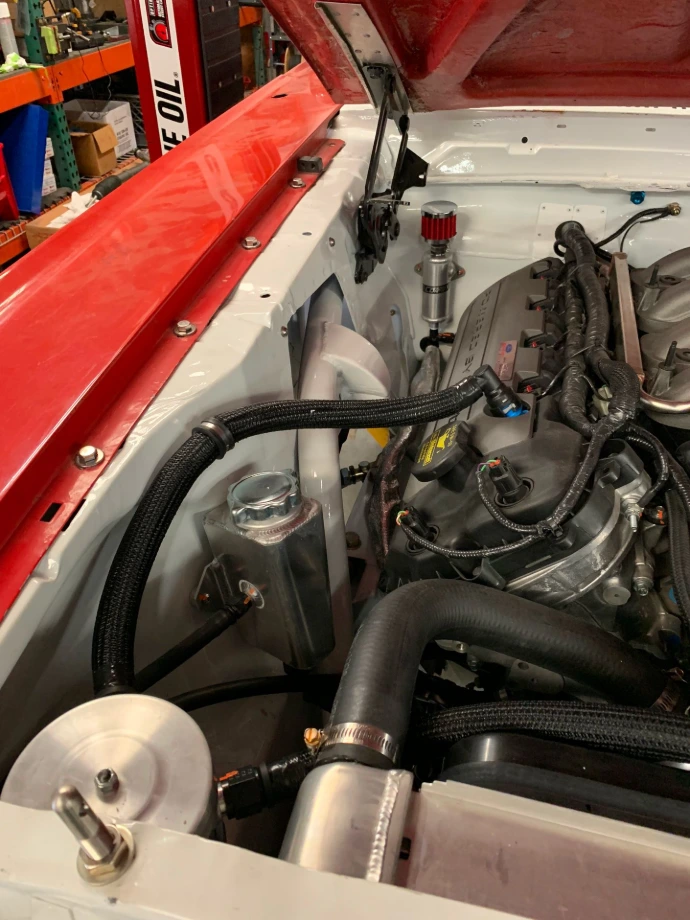
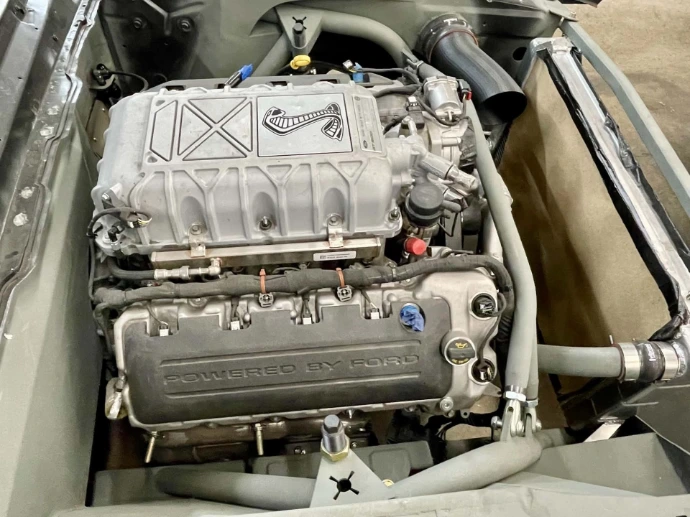
While its all-aluminum construction keeps weight surprisingly low, the dual overhead cam cylinder heads make the Coyote substantially wider than the Windsor small-block engines originally found in first-generation Mustangs. Successfully packaging a modern 5.0L into a classic Mustang requires far more than simply installing engine mounts—it requires thoughtful engineering of the entire front half of the vehicle.
Fortunately, this isn't uncharted territory.
At Cortex Racing, we've helped enthusiasts successfully complete dozens of first-generation Mustang Coyote swaps. Over the years we've developed and refined solutions that remove much of the guesswork, allowing builders to focus less on solving clearance issues and more on enjoying the finished product.
Every build is unique, but nearly every first-generation Coyote swap involves planning around the following areas:
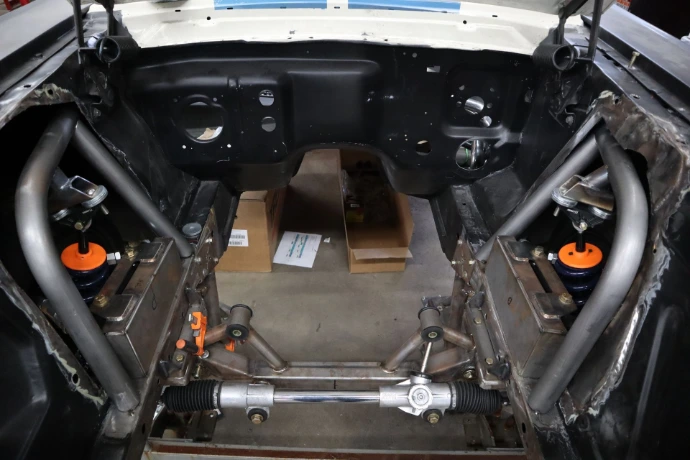
- Front Suspension & Shock Towers – The Coyote's wide cylinder heads leave little room within the factory engine bay. Modern suspension systems not only create the necessary clearance but also dramatically improve handling, steering precision, and overall vehicle performance. It is effectively impossible to keep the factory shock towers intact and get the coyote to fit.
- Steering & Oil Pan Clearance – Engine placement, steering geometry, and oil pan selection all compete for the same space. Choosing components designed to work together eliminates many of the clearance issues commonly encountered during a swap.
- Headers & Steering Shaft Routing – Exhaust routing is one of the tightest packaging areas on the vehicle. Proper header selection and steering geometry are critical to achieving both performance and serviceability.
- Brake System Clearance – Factory brake boosters often interfere with the driver's side cylinder head. Modern braking solutions can improve both packaging and braking performance simultaneously.
- Accessory Drive Packaging – Air conditioning, power steering, alternator placement, and belt routing all deserve consideration early in the planning process. Small differences in accessory layout can have a significant impact on installation.
- Transmission Tunnel Clearance – Modern manual and automatic transmissions frequently require additional tunnel clearance depending on the transmission selected and desired driveline geometry.
At first glance, this list can seem intimidating. In reality, these aren't roadblocks—they're simply engineering decisions that should be made before parts are ordered.
That's exactly why this guide exists.
Over the next several sections, we'll walk through each of these systems individually, explaining what needs to change, why it needs to change, and the options available to accomplish it. Whenever applicable, we'll also highlight the Cortex Racing solutions we've developed through years of engineering and real-world customer builds to simplify the process and eliminate unnecessary trial and error.
Lessons Learned
Don't solve fitment problems one part at a time—solve them as a complete system. The engine, suspension, steering, brakes, oil pan, headers, and accessory drive all compete for the same limited space. Components engineered to work together almost always produce a cleaner installation, fewer surprises, and a better driving Mustang.
Front Suspension
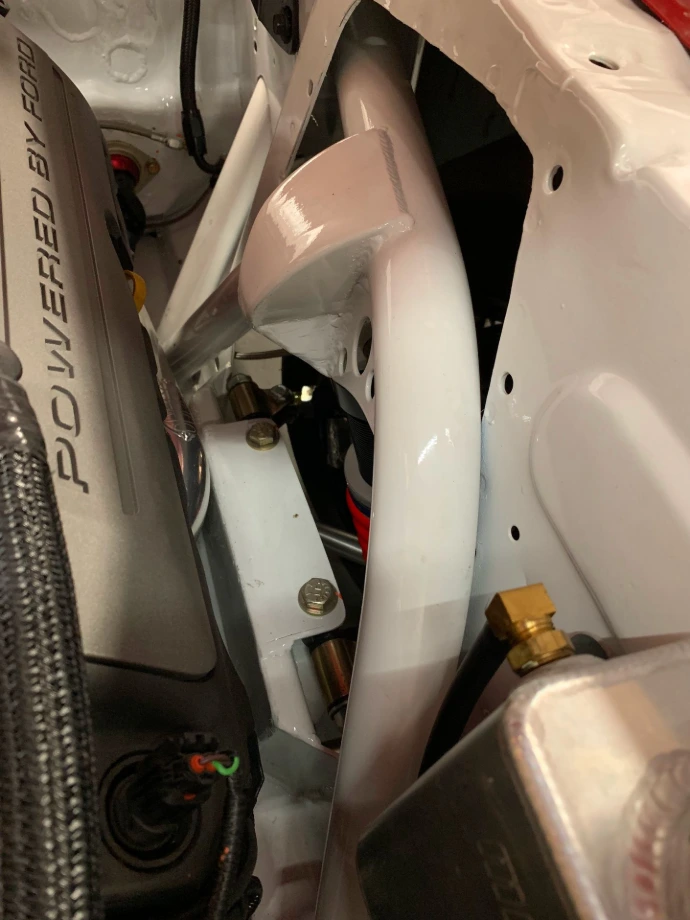
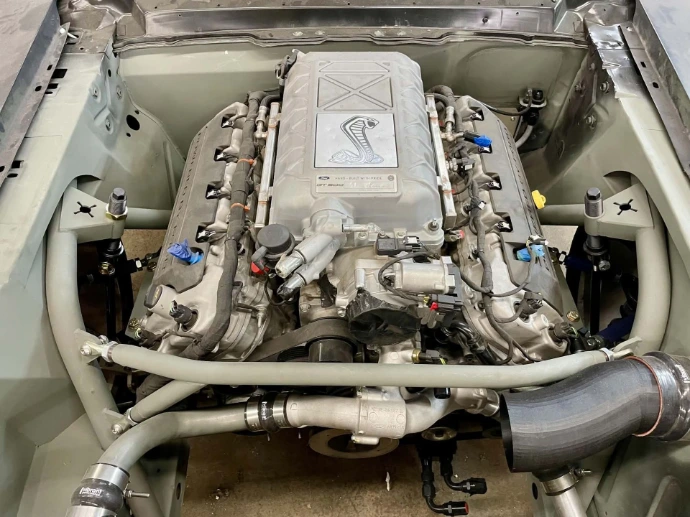
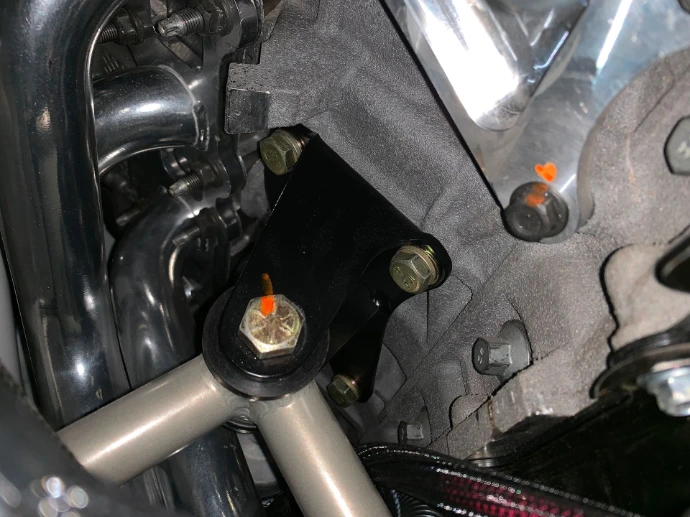
The front suspension is arguably the single most important system on a first-generation Mustang Coyote swap. While many builders initially view it as a necessary modification to create engine clearance, the reality is that it's an opportunity to fundamentally transform how the car drives.
The factory suspension found under early Mustangs was designed over 60 years ago around narrow bias-ply tires, manual steering, and small-block V8s producing a fraction of today's power. Even in perfect condition, the original geometry simply wasn't intended to support the grip, braking capability, and steering precision expected from a modern performance car.
A Coyote swap presents the perfect opportunity to modernize the entire front end—not only to create the space required for the engine, but to unlock the performance potential that the engine makes possible.
Why Modern Suspension Matters
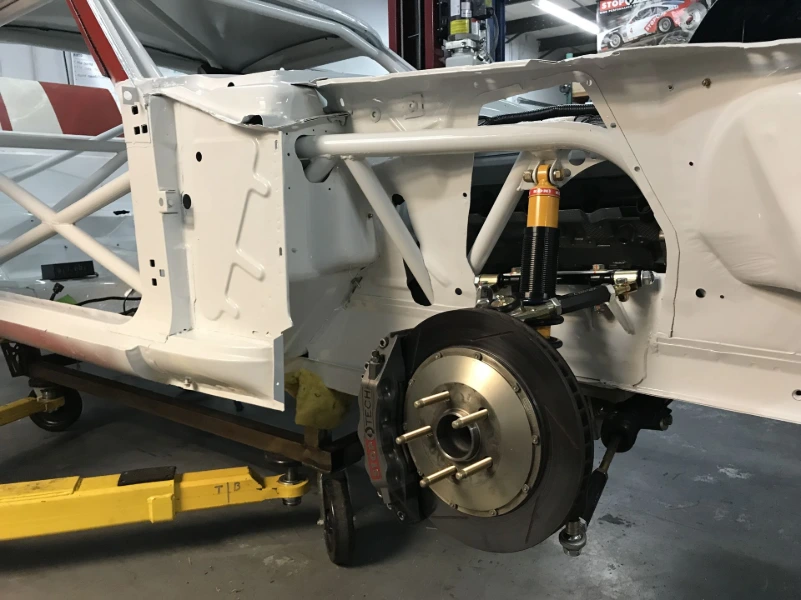
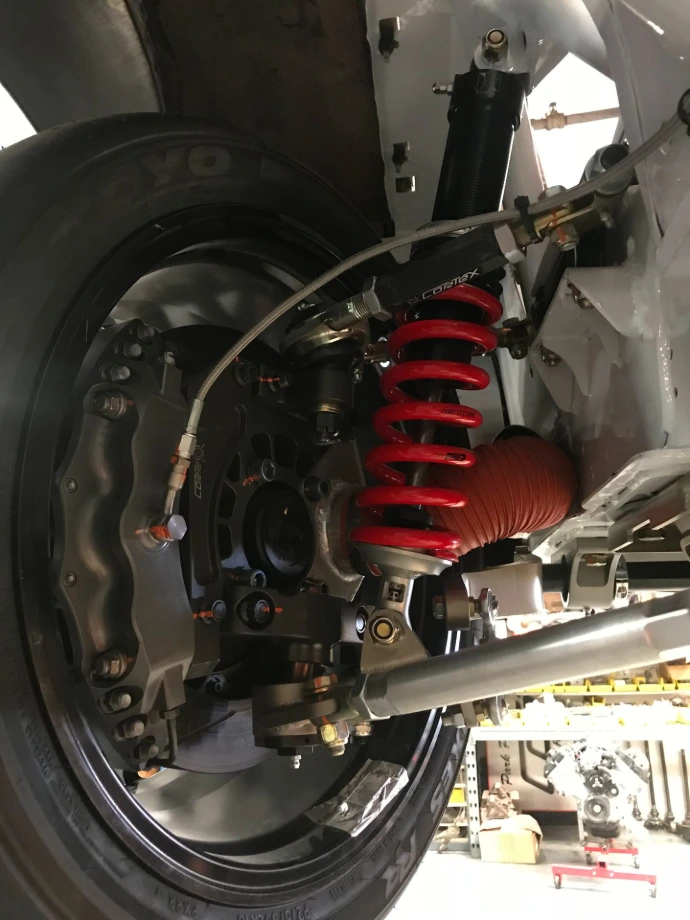
Modern performance tires generate substantially more grip than the original suspension was ever designed to manage. As cornering loads increase, maintaining proper camber, minimizing bumpsteer, controlling body roll, and providing consistent steering feedback become increasingly important. These characteristics are largely dictated by suspension geometry—not simply by installing stiffer springs or coilovers. Cortex's Xtreme Grip front suspension systems were designed from the ground up with modern geometry, optimized roll center behavior, minimized bumpsteer, and increased chassis stiffness to take full advantage of today's tires and braking systems.
Packaging the Coyote
One of the greatest advantages of replacing the factory front suspension is improved packaging.
The Coyote's wide dual overhead cam cylinder heads compete for space with the factory shock towers, steering components, brakes, and accessory drive. Rather than forcing individual components to coexist within an engine bay that was never designed for them, a properly engineered front suspension solves these challenges as a complete system.
Steering: More Than Just Rack-and-Pinion
One of the most noticeable improvements in any first-generation Mustang is steering feel.
Many builders focus on converting from a steering box to rack-and-pinion steering, but the steering rack is only one piece of the equation. Steering precision is equally influenced by suspension geometry, bumpsteer, compliance, and chassis rigidity. Installing a rack without addressing these factors often produces only marginal improvements.
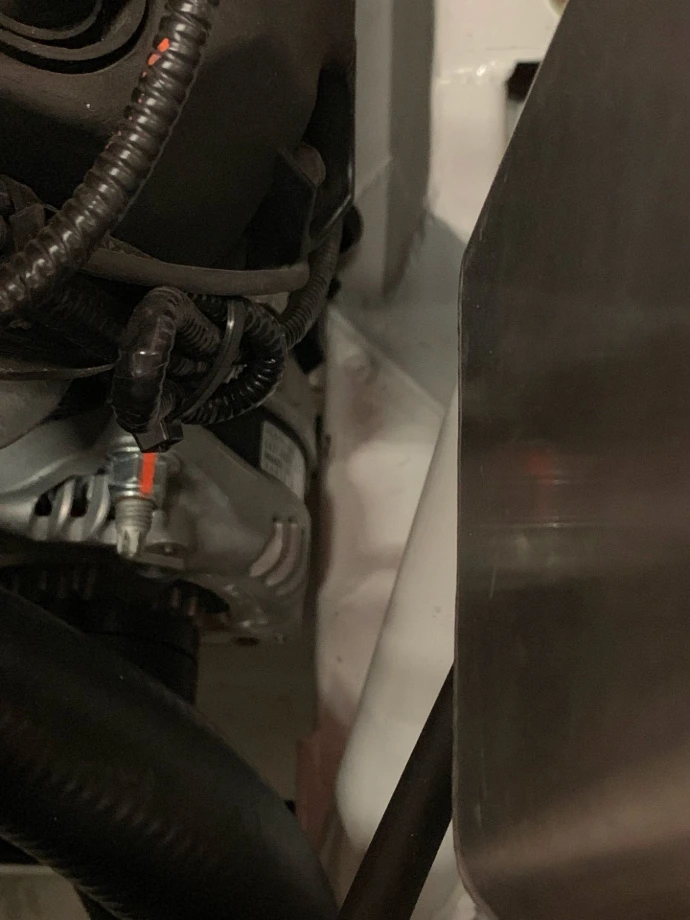
A complete front suspension system allows the steering and suspension to be engineered together, resulting in a car that feels predictable, responsive, and confidence inspiring whether it's carving a canyon road or navigating a parking lot. Steering also happens to be a major fitment challenge in Coyote swapped mustangs. Fortunately the solution is relatively straightforward with the right pieces. For non-racing applications, we find that the IDIDIT adjustable columns offer a great balance between price and performance. We pair this with a custom length steering shaft and pair it to a DSE quick-ratio rack. To power the hydraulic rack, our gold standard go-to is the KRC power steering pump kit. If you're looking for all of these parts, we offer a variety of proven coyote compatible racks, columns, and accessories here.
The Cortex Approach
At Cortex Racing, we don't view suspension as simply another bolt-on upgrade. We view it as the foundation of the entire vehicle.
Our first-generation Mustang front suspension systems were engineered to solve two problems simultaneously:
- Create the packaging space required for modern Coyote powertrains.
- Deliver suspension geometry capable of taking full advantage of modern tires, brakes, and horsepower.
Rather than adapting 1960s suspension geometry to today's performance expectations, our Xtreme Grip systems were designed from a clean sheet with modern engineering principles. Features such as optimized roll center geometry, minimized bumpsteer, increased chassis stiffness, adjustable ride height, and compatibility with modern S197 brake systems all contribute to a Mustang that feels composed, predictable, and genuinely enjoyable to drive.
Whether your goal is a comfortable street cruiser or a national-level Pro Touring build, selecting the right suspension package early in the project simplifies the remainder of the build and establishes the foundation for everything that follows.
Lessons Learned
The biggest mistake we see isn't choosing the wrong suspension—it's viewing suspension as nothing more than a way to make the engine fit.
The front suspension determines how your Mustang steers, brakes, corners, accepts wider tires, and ultimately how enjoyable it is to drive. Choose a system that solves packaging and performance together, and the rest of the build becomes dramatically easier.
Looking for the right suspension package?
Explore Cortex Racing's Xtreme Grip™ First-Generation Mustang Front Suspension Systems or contact our engineering team. We'll help you select the right combination based on your engine, brake package, wheel and tire goals, and intended vehicle use.
Engine Management & Wiring
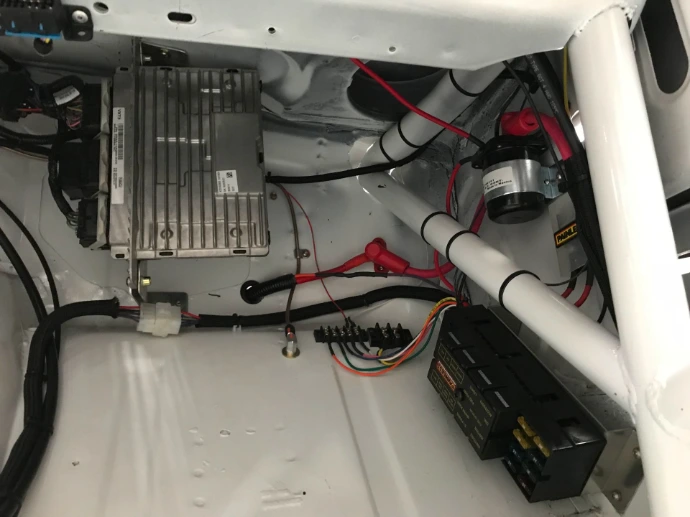
For many enthusiasts, wiring is the most intimidating aspect of a Coyote swap. Modern engines rely on sophisticated electronics to manage ignition timing, fuel delivery, drive-by-wire throttle control, variable cam timing, and countless other functions. Fortunately, Ford Performance's Control Pack has made integrating a Coyote into a first-generation Mustang more straightforward than ever.
For the majority of street-driven builds, the Ford Performance Control Pack is the preferred solution. These packages include the engine harness, PCM, accelerator pedal assembly, oxygen sensors, and other critical components needed to operate the engine in a stand-alone configuration. They provide OEM-level drivability while eliminating much of the complexity traditionally associated with modern engine swaps.
Builders pursuing specialized applications or motorsports may choose a standalone aftermarket ECU, offering nearly unlimited flexibility at the expense of additional tuning, setup, and integration. Unless your build has unique requirements, the Ford Control Pack remains the most proven and reliable option.
Beyond selecting an engine management system, take time to map out your vehicle's complete electrical strategy. While the Control Pack handles the engine, your Mustang still relies on numerous electrical systems that must work together seamlessly. Planning these components before the build begins will simplify installation, reduce troubleshooting, and create a finished product that performs with the refinement of a modern production vehicle.
Lessons Learned
Don't leave wiring until the end of the project.
Electrical systems are easiest to install when they're planned alongside the rest of the build—not after the engine is already in the car. A little time spent organizing your electrical strategy upfront will pay dividends in reliability, serviceability, and overall build quality.
Fuel Systems
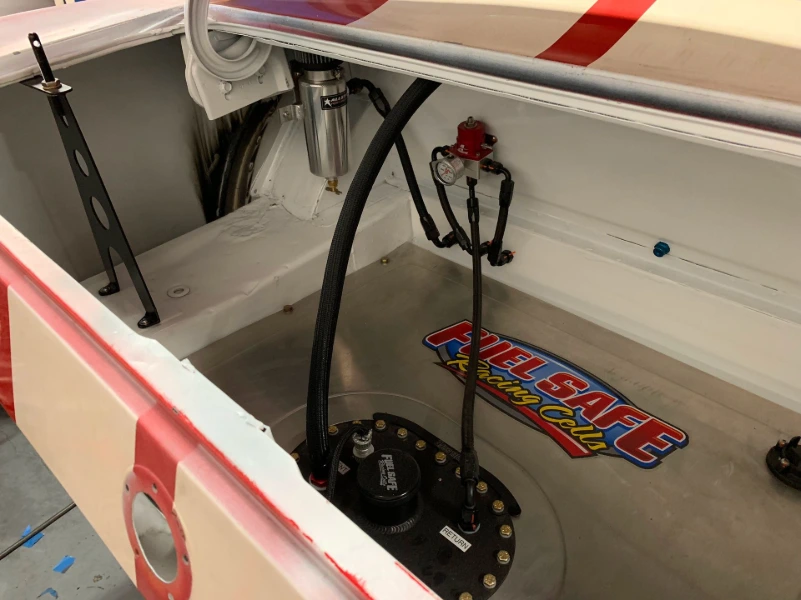
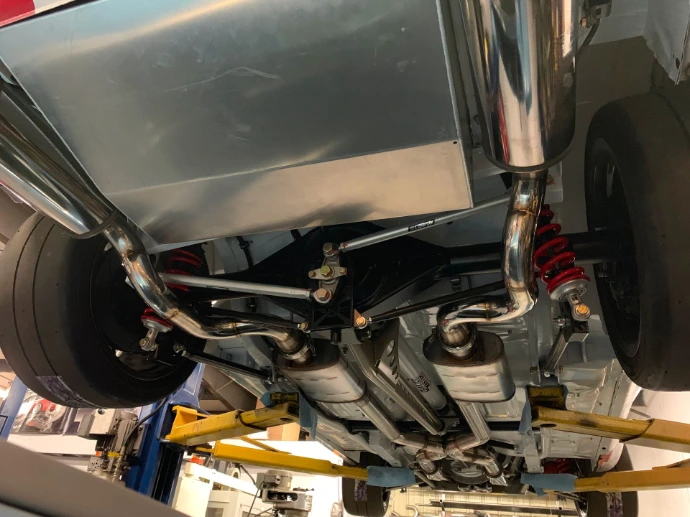
A properly designed fuel system is critical to the reliability of any Coyote swap, and fortunately, it's no longer an area that requires extensive fabrication. Complete drop-in fuel tank assemblies have simplified the process by integrating high-pressure fuel pumps, internal baffling, and the necessary wiring provisions into a direct replacement package for first-generation Mustangs.
One of the first decisions builders should make is whether a replacement EFI fuel tank or a motorsports fuel cell best fits the intended use of the vehicle. For the vast majority of street-driven and Pro Touring builds, a quality EFI-ready replacement tank provides excellent drivability, fuel control, and a clean OEM-style installation. Dedicated race cars or vehicles competing under sanctioning bodies may require an FIA-rated or other approved motorsports fuel cell to satisfy safety regulations.
Just as importantly, build the fuel system around your long-term horsepower goals—not just today's combination. Selecting pumps, injectors, and supporting components with future growth in mind can eliminate the need for costly upgrades as your project evolves.
The Cortex Approach
At Cortex Racing, we offer complete drop-in fuel system solutions engineered specifically for first-generation Mustang Coyote swaps. Our systems eliminate much of the guesswork by providing a proven package with the fuel pump, baffled tank, and wiring provisions already integrated, allowing you to spend less time sourcing individual components and more time building your Mustang. Our gold standard recommendation continues to be our 22 gallon fuel cell systems. The added fuel cell capacity is a nice add and helps to move more weight rearward on the chassis and the added safety is always worth the extra money. Whether you're planning a naturally aspirated street car or a high-horsepower forced induction build, we can help match the fuel system to your performance goals.
Exhaust System
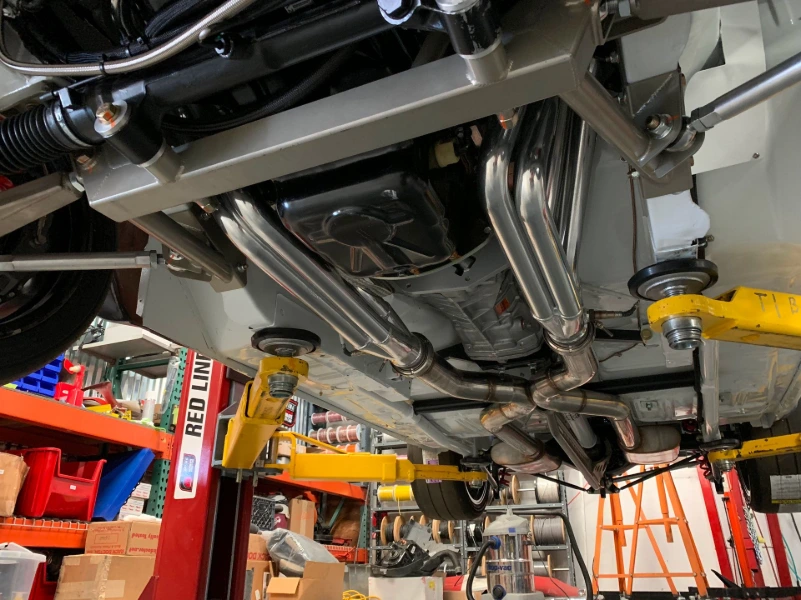
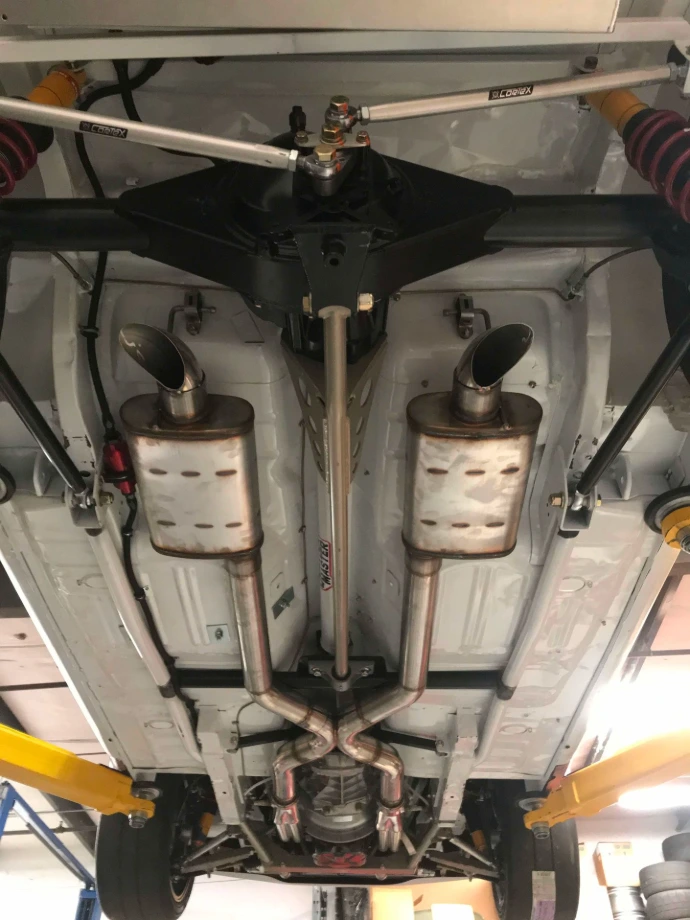
Header fitment is one of the most common concerns when planning a first-generation Mustang Coyote swap. Between the steering shaft, suspension, chassis, and engine bay, space is at a premium, making exhaust one of the easiest places to create fitment headaches.
Fortunately, it doesn't have to be.
Builders utilizing a proven drop-in Coyote swap package can eliminate much of the guesswork by selecting components that were designed to work together from the start. Rather than modifying headers or chasing clearance issues, choosing a complete, engineered solution allows the exhaust to become one of the simplest parts of the installation.
The Cortex Approach
At Cortex Racing, we sell several proven first-generation Mustang Coyote swap headers that work well alongside our suspension and steering systems to provide true bolt-in installation. No custom fabrication. No steering shaft interference. No trial and error.
If you're building around a Cortex suspension package, the engineering has already been done for you. Simply install the components and move on to the next phase of the build.
For builders pursuing custom engine locations or one-off chassis configurations, custom headers may ultimately be required. However, for the overwhelming majority of Coyote swaps, a proven bolt-in solution is the fastest, easiest, and most reliable path to getting your Mustang on the road.
Lessons Learned
Don't overcomplicate your build.
If your goal is a reliable, enjoyable Coyote-swapped Mustang, choose components that are designed to work together. Every hour spent modifying parts is an hour you're not driving the car.
Brakes
A Coyote swap brings modern power and performance to a first-generation Mustang, but the factory boosted brake system presents an immediate packaging problem: the original brake booster occupies the same space needed by the Coyote's driver-side cylinder head.
For that reason, the factory boosted brake system will not work with a typical Coyote installation. The brake system needs to be addressed as part of the swap rather than treated as an upgrade after the engine is installed.
For most builds, the simplest solution is to pair a modern brake package with a suspension system designed to accept it. Cortex offers a variety of brake adapters for our first-generation Mustang suspension systems, including solutions for popular OEM brake take-offs from late-model Mustangs. This allows builders to take advantage of readily available modern brake components without developing a completely custom braking system.
The Cortex Approach
Cortex offers a straightforward solution for eliminating the factory booster while retaining a clean, functional pedal assembly. Our Cortex Racing 1964–1966 Mustang Tilton Pedal Kit uses a hanging pedal assembly with remote reservoirs, providing the clearance required for a Coyote while keeping the master cylinders and fluid reservoirs accessible and neatly packaged.
For most street and Pro Touring builds, this is the simplest path: pair the Cortex suspension and appropriate brake adapters with a modern brake package and eliminate the factory booster clearance problem at the same time.
A floor-mounted pedal assembly is another option, particularly for dedicated motorsports builds. These systems can provide additional adjustability and packaging flexibility, but they require considerable modification to the Mustang's floor and are generally better suited to builds where that level of fabrication is already part of the plan.
Lessons Learned
Solve the brake system before the engine goes in.
The brake booster, master cylinder, suspension, steering, and engine all compete for the same limited space. Addressing those systems together prevents one of the most common Coyote-swap surprises: discovering that the engine and brake system don't fit together after the parts have already been purchased.
Expected Cost
One of the biggest mistakes you can make with a Coyote swap is starting the project before you understand the entire budget.
There is no single number that accurately answers the question, “How much does it cost to Coyote-swap a first-generation Mustang?” The answer depends on the condition of the car, the Coyote and transmission you choose, how much fabrication you can do yourself, whether you buy new or used components, and how ambitious you want the finished car to be.
The more useful question is:
How much will it cost to build the finished Mustang you actually want?
That distinction matters because the Coyote itself is often one of the easier parts of the project.
The challenge—and much of the expense—is everything required to make that modern powertrain work safely, reliably, and without turning the car into a collection of compromises.
The $15,000–25,000 Aggressive DIY Build
There is absolutely a lower-cost way to approach a Coyote swap.
A capable DIY builder can find a crashed Coyote-powered donor for around $6,000 and harvest the engine, transmission, clutch and flywheel, PCM, wiring harness, accessories, sensors, throttle body, pedals, alternator, starter, and other OEM components.
That changes the economics of the project dramatically.
Instead of purchasing the engine, transmission, clutch, and engine-management system separately, the donor provides the majority of the powertrain in one purchase.
But the $6,000 donor is not a $6,000 Coyote swap.
You still need to make the Mustang capable of using everything you just installed.
A realistic aggressive-DIY budget might look something like this:
| Component / System | Aggressive DIY Budget |
|---|---|
| Complete Coyote donor | ~$6,000 |
| Front suspension | ~$5,000 |
| Brakes | ~$1,000 |
| Steering | ~$1,000 |
| Fuel tank / pump | ~$850–1,000 |
| Fuel lines / filter / regulator / fittings | ~$500–800 |
| Cooling system | ~$800–1,500 |
| Coyote headers | ~$1,200–1,300 |
| Header-back exhaust | ~$750–1,250 |
| Driveshaft | ~$500–800 |
| Wiring / hoses / intake / miscellaneous | ~$1,500–2,500 |
| Approximate total | ~$15,000–25,000 |
This assumes a highly capable DIY builder who performs essentially all of the fabrication, assembly, wiring, plumbing, troubleshooting and installation themselves.
It also assumes aggressive sourcing of used or donor components.
That build is absolutely possible.
But there is a cost that doesn't appear on the spreadsheet: your time, your fabrication capability, and your tolerance for troubleshooting.
And that's where the next level of build begins to make sense.
The $30,000–50,000 “Let's Do It Right” Build
The next step isn't simply spending more money on the same parts.
It's changing the way the project is approached.
Instead of finding the cheapest solution to each individual problem, you select components and systems that were designed to work together.
The goal isn't to build the most expensive Mustang possible.
The goal is to dramatically increase the probability that, when the project is finished, you have a Mustang that starts, stops, steers, handles, cools, and drives the way you intended it to.
The same basic categories we used in the aggressive DIY build now look more like this:
| Component / System | Aggressive DIY | Let's Do It Right |
| Coyote engine / donor powertrain | ~$6,000 donor | ~$8,000–12,000 |
| Transmission / clutch | Included in donor | ~$4,000–6,000 |
| PCM / engine management | Included in donor | ~$2,500–3,000 |
| Front suspension | ~$5,000 | ~$9,000–11,000 |
| Brakes | ~$1,000 | ~$3,000–5,000 |
| Steering | ~$1,000 | ~$2,000–3,000 |
| Fuel tank / pump | ~$850–1,000 | ~$850–2,900 |
| Fuel lines / regulator / fittings | ~$500–800 | ~$700–1,000 |
| Cooling system | ~$800–1,500 | ~$1,000–2,000 |
| Coyote headers | ~$1,200–1,300 | ~$1,200–1,300 |
| Header-back exhaust | ~$750–1,250 | ~$1,000–1,500 |
| Driveshaft | ~$500–800 | ~$500–800 |
| Wiring / hoses / intake / miscellaneous | ~$1,500–2,500 | ~$2,000–3,000 |
| Approximate total | ~$15,000–25,000 | ~$30,000–50,000 |
The exact numbers will vary considerably with the engine generation, transmission, intended use and how much of the work is performed yourself. The point of the comparison isn't to create a universal parts list—it is to illustrate what the additional investment buys.
What does the extra money actually get you?
Engineered solutions instead of improvised solutions.
Known compatibility instead of hoping parts work together.
Modern suspension geometry instead of adapting whatever used suspension happened to be available.
Purpose-built steering and brake systems instead of trying to make unrelated components coexist.
Proper fuel delivery and cooling instead of finding out the hard way that the system isn't adequate.
Predictable fitment instead of cutting, welding, modifying and redoing parts because the first solution didn't work.
And perhaps most importantly:
A dramatically better probability of success.
That last point is easy to underestimate.
A Coyote swap doesn't become difficult because any single component is particularly complicated. It becomes difficult because dozens of systems have to work together in a chassis that was never designed for them.
When those systems are engineered together from the beginning, every decision makes the next decision easier.
The result isn't simply a more expensive Mustang.
It's a Mustang that can actually take advantage of what the Coyote gives you.
Modern power deserves modern control. Proper suspension, steering and brakes allow you to use that power rather than simply having it. Proper cooling and fuel systems make the car reliable enough to enjoy. Proper integration eliminates many of the little problems that can turn a completed swap into a car that is constantly being worked on.
That's the real value of spending the additional money.
You're buying performance, reliability, predictability and peace of mind—not simply more expensive parts.
The $50,000–75,000+ Professional Build
Once you're paying a shop to perform the work, the equation changes again.
Fabrication, assembly, wiring, plumbing, exhaust fabrication, tuning, troubleshooting and all of the small integration problems that inevitably arise can add substantial labor cost.
A professionally completed build can therefore move into the:
$50,000–75,000+ range
At that point, you're no longer simply paying for parts.
You're paying for expertise, fabrication, time, problem solving and a finished car.
For the right owner, that can be an excellent value. The alternative isn't necessarily spending less money—it may be spending hundreds of hours of your own time learning, fabricating, troubleshooting and correcting mistakes.
Used Parts Aren't the Problem
There is nothing inherently wrong with using used components.
In fact, the $6,000 donor strategy is one of the best ways to make a Coyote swap financially accessible.
A good used Coyote, transmission, PCM or other OEM component can be an excellent value.
The key is understanding where used parts make sense and where they can create more problems than they solve.
For example, finding a used OEM steering rack or a known-good set of brakes from a reputable source can be perfectly reasonable.
But buying a random used aftermarket suspension system from an online marketplace because it saves $2,000 can be a very different proposition.
Maybe it is the wrong spring rate.
Maybe it is missing hardware.
Maybe a ball joint is worn.
Maybe the previous owner modified something.
Maybe the components aren't compatible with the rest of your combination.
Maybe the manufacturer no longer supports that version.
Now your $2,000 savings can turn into weeks of research, additional parts, fabrication and frustration.
The same applies to used steering components, brake components and other specialized systems.
Spend money on the hard-to-find, difficult-to-replace stuff.
Save money where the risk is low.
A used Coyote from a reputable donor can make tremendous sense. A used suspension system with unknown history and incomplete components may not.
The objective isn't to spend the most money possible.
It's to spend money where it eliminates uncertainty.
Don't Budget the Swap. Budget the Finished Car.
This is perhaps the most important financial lesson of a Coyote swap.
If you have $30,000 available for the entire project, don't spend $15,000 of it on the engine and transmission and assume you're halfway finished.
You're not.
You've purchased the easiest part of the project.
The difficult part is everything surrounding it:
- Making the engine fit
- Building the chassis around modern power
- Solving steering and brake packaging
- Providing adequate fuel delivery
- Cooling the engine
- Building the exhaust
- Integrating the electronics
- Connecting the drivetrain
- Plumbing everything correctly
- Making the car safe and reliable
A $6,000 donor can be an incredible starting point.
But the objective isn't to build a $6,000 Coyote swap.
The objective is to build a finished Mustang.
And that is why planning the entire car before buying parts is so important.
Don't budget the swap. Budget the finished car.
The Coyote may be the headline feature, but it isn't what makes the project successful.
The engineering around the Coyote does.
Parts List
So what do you actually need to Coyote-swap a first-generation Mustang?
The answer is a lot more than an engine. But you also don't have to figure it all out yourself.
Start with the foundation.
CorteX Radial X Street Front Suspension System
This is the foundation of the conversion and includes the components necessary to put the Coyote in the car while completely replacing the factory front suspension architecture.
Add your shocks.
Choose from street-oriented shocks through fully adjustable performance systems depending on how you plan to use the car.
Add your brakes.
Wilwood, Brembo, or OEM S197/S550 take-off solutions. CorteX provides the appropriate brackets and system components to put modern braking capability on the car.
Add your pedals.
CorteX/Tilton Hanging Pedal System
A modern pedal and master-cylinder solution that also solves one of the major Coyote-swap packaging problems in the early Mustang engine bay.
Add your steering.
Add the appropriate intermediate shaft, U-joints, hoses and fittings, and you have a modern rack-and-pinion steering system designed around the new front suspension.
Add power steering.
KRC Coyote Hydraulic Power Steering Pump Kit
Purpose-built Coyote hydraulic power steering with the pump and reservoir you need to complete the system.
Add your fuel system.
Or step up to the CorteX 16-gallon FIA-rated fuel cell for a more serious build.
Then add your AN feed and return lines, filter and regulator.
Add your headers.
Then finish the system with a header-back exhaust built around your particular combination.
And we'll help you with everything else.
The engine. Transmission. Clutch. Control pack. Engine harness. Throttle pedal and sensors. Radiator and cooling system. Driveshaft. Intake. Fuel plumbing. Exhaust. Wiring. And all of the little pieces that turn a collection of parts into a running car.
That's the point.
You don't need to spend six months figuring out which parts fit which other parts.
CorteX can supply the individual components, assemble the systems into a complete package, or handle the entire conversion for you.
Start with a roller. Start with a pile of parts. Start with a complete car.
We'll meet you wherever you are—and can take the project all the way to a finished, driving Coyote-powered Mustang.
If you're using this list for planning purposes, dont forget about the other supporting systems and small parts that can add up. Fortunately we can help supply you with a lot of what you need. Just give us a call.
Depending on your specific combination, plan for:
- Steering: Intermediate/lower steering shaft, U-joints, power-steering lines and fittings, and reservoir.
- Brakes: Hard brake lines, flexible hoses, fittings, and proportioning/bias components as required.
- Fuel: AN feed and return lines, fittings, filter, regulator, and pump wiring.
- Exhaust: X-pipe, catalytic converters where required, mufflers, tailpipes, O₂ sensor provisions, hangers and heat shielding.
- Cooling: Radiator, fans, shroud, hoses, steam/degassing lines, expansion/overflow tank and transmission cooler where applicable.
- Engine integration: Intake tube, air filter, PCV/vacuum plumbing, heater hoses, wiring and electrical integration.
- Driveline: Driveshaft, transmission crossmember/mounting, appropriate yokes and U-joints.
- Miscellaneous: Fluids, clamps, fasteners, brackets, connectors, relays, fuses and the inevitable collection of fittings and hardware that every custom build requires.
None of these components is particularly complicated. The challenge is making sure they all work together.
That's where planning the entire combination before buying parts can save a tremendous amount of time, money and frustration.